Blog
1993
in business
47
States Representend
$60,000,000
Recovered in last 12 months
574%
Average Increase on Settlements
*OPPAGA
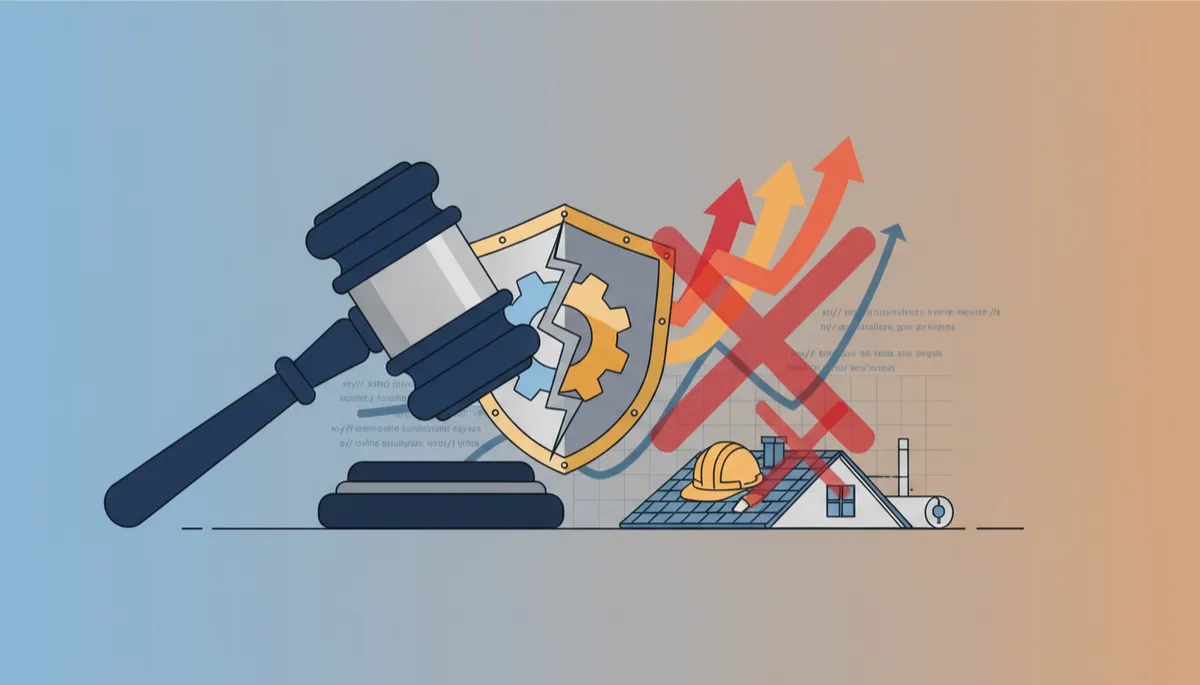
Roofer Cease and Desist: Unauthorized Licensed Activities
Insurance Compliance, Public Adjusting, Roofing & Restoration Risk Management
Roofer Agrees to Cease and Desist: What the Darren Reeves Consent Order Means for Contractors and Agencies
Bottom Line- work with a licensed Public adjuster, save yourself the grief, time and mess. We will work with you to ensure your client gets as much as possible. Contact us about our Exclusive Power Partner Program. It costs you and the client nothing and you both will benefit.
Phone: (408) 479-2427
Website: https:MetroPANevada.com
Start your Free Claim Double Check
This is in IOWA, but it started in Texas and Nevads
The Iowa cease and desist and consent order involving roofer Darren Reeves is a loud, unavoidable warning shot to every roofing, restoration, and mitigation business that even flirts with public adjusting. If you advertise that you “handle the claim” or “negotiate with your insurer,” this case puts a target on your back. In a regulatory climate where states are cracking down hard, the line between contractor and public adjuster is no longer blurry—it’s a tripwire. Cross it, and you risk fines, criminal exposure, void contracts, and class actions. Metro Public Adjustment Inc. Nevada exists because that line matters, and this case proves it.
The Darren Reeves Case: How a Roofer Ended Up in the Regulator’s Crosshairs
In June 2024, the Iowa Insurance Division issued a summary cease and desist order against Darren Reeves Roofing LLC, owned by Darren L. Reeves. According to the Division’s petition, Reeves and his company crossed a bright legal line: they held themselves out as performing public adjusting services in connection with insurance claims, despite not being licensed as public adjusters in Iowa (see Iowa Insurance Division petition, June 20, 2024).
The Division alleged that Reeves’ businesses did more than simply repair roofs. Their advertising and conduct suggested they would represent property owners in the settlement of insurance claims—precisely the role that Iowa law reserves for licensed public adjusters. That is not a minor technicality; it is a statutory violation under Iowa Code § 522C.4, which requires a license to act as or even represent oneself as a public adjuster in the state.
On December 11, 2024, Reeves and his roofing company entered into a consent order with the Iowa Insurance Division to resolve the matter. Under that agreement, Reeves agreed to:
Stop claiming—directly or indirectly—to be a public adjuster or to perform public adjusting services.
Remove any such representations from websites, advertisements, and social media.
Instruct employees not to engage in adjusting, negotiating, or settling insurance claims on behalf of customers.
In other words, the state forced Reeves back into his legal lane: contracting only, no claim handling, no negotiation, no “we’ll fight your insurer for you” messaging. That is the same message every contractor, agency, and restoration firm should be hearing right now.
Iowa Code § 522C.4: The License Wall You Cannot Ignore
Iowa Code § 522C.4 is blunt: a person shall not act as, or represent that the person is, a public adjuster in Iowa unless properly licensed under Chapter 522C (FindLaw). That prohibition covers:
Advertising or suggesting that you “handle” or “negotiate” insurance claims for policyholders.
Communicating with insurers on behalf of the insured to adjust, settle, or dispute claims.
Representing yourself as an expert advocate for the homeowner in claim valuation or coverage disputes.
Violating § 522C.4 is not just a slap-on-the-wrist issue. Under related provisions, the Iowa Insurance Commissioner can issue cease and desist orders, impose civil penalties, and even seek court enforcement. Noncompliance can lead to fines ranging from $3,000 to $10,000 per violation, civil contempt findings, and, in some circumstances, criminal charges for serious misdemeanors (Justia).
For agencies and businesses that partner with contractors, this is a compliance minefield. If your vendor network includes roofers or restoration outfits that “help with claims” in a way that smells like public adjusting, you inherit reputational and legal risk. Regulators do not care about your marketing spin; they care about what you actually do and how you present those services to the public.
Iowa Code § 103A.71(3): Contractors Cannot Be Claim Negotiators
The Reeves case sits on top of another powerful statute: Iowa Code § 103A.71(3). This provision addresses residential contractors—especially those doing exterior work after storms and catastrophes. It states that a residential contractor shall not:
“…represent or negotiate on behalf of, or offer or advertise to represent or negotiate on behalf of, an owner or possessor of residential real estate on any insurance claim in connection with the repair or replacement of roof systems, or the performance of any other exterior repair, exterior replacement, or exterior reconstruction work…”
That language is a direct legislative shot at the “one-stop shop” contractor who says, “We’ll fix your roof and handle your claim.” In Iowa, that is unlawful. Violations are treated as unlawful practices under Iowa’s consumer protection statute, § 714.16 (Lawserver).
It gets worse for violators: under § 103A.71(5), any contract entered into by a residential contractor who crosses this line can be deemed void and unenforceable. That opens the door for homeowners—and class action attorneys—to argue that:
They do not owe payment under the contract at all; and
The contractor engaged in deceptive or unlawful trade practices.
Courts have backed up this framework. In Shamrock Hills, LLC v. State of Iowa (8th Cir. 2026), the court upheld § 103A.71(3) against constitutional challenges, affirming that the state can lawfully prohibit contractors from acting as de facto public adjusters (CounselStack). The message: this statute is here to stay, and regulators are not afraid to use it.
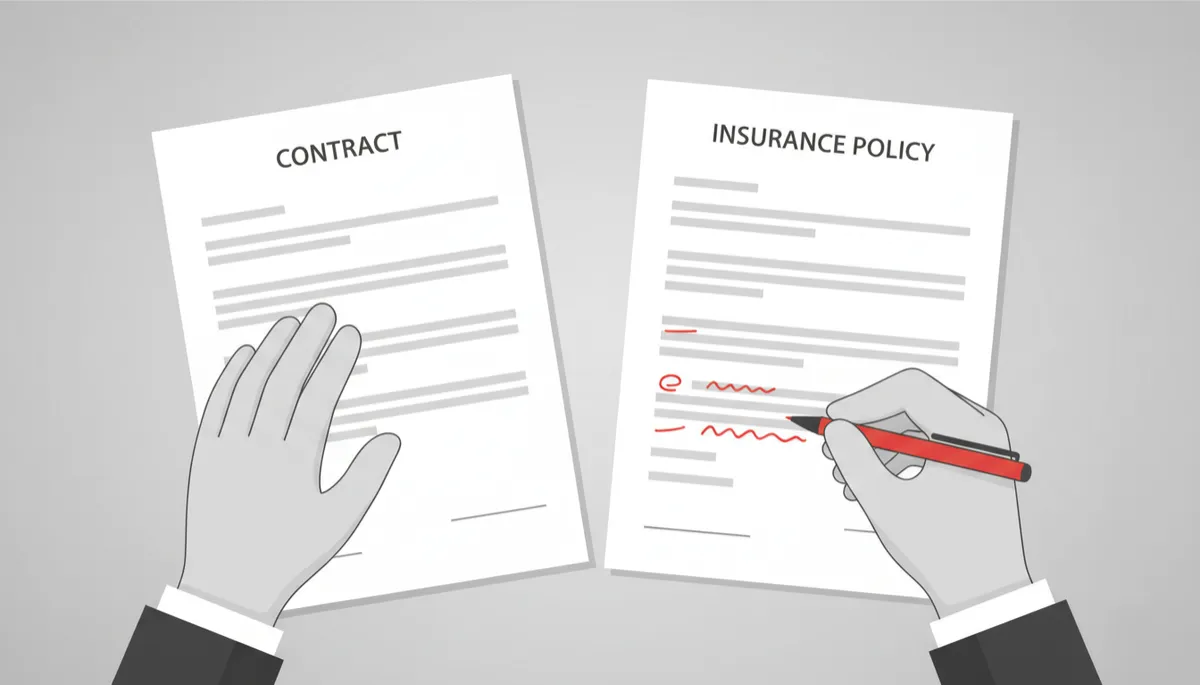
Sloppy contract language can void agreements and invite class actions against contractors.
The Critical Boundary: Contractor vs. Public Adjuster
The Reeves consent order is not about roofing quality. It is about role confusion. In Iowa—and in many other states—the law draws a hard line between:
Contractors, who are hired to repair or replace damaged property; and
Public adjusters, who are licensed to represent policyholders in negotiating and settling insurance claims.
Once a contractor begins telling homeowners, “We’ll deal with your insurer,” “We’ll negotiate your claim,” or “We’ll get you approved,” they have stepped squarely into public adjusting territory. At that point, unless they hold a valid public adjuster license, they are likely violating § 522C.4 and § 103A.71(3).
📌 Key Takeaway: Contractors can estimate and perform work. Licensed public adjusters can advocate, negotiate, and settle claims. Mixing those roles without a license is a legal trap.
For businesses and agencies, respecting that boundary is more than compliance—it is strategic risk management. Metro Public Adjustment Inc. Nevada exists to be the licensed firewall between homeowners and carrier tactics. When contractors try to “help” by crossing into claim negotiation, they not only put themselves at risk; they also weaken the homeowner’s legal position and hand insurers ammunition to deny, delay, or underpay claims.
Why Restoration Contractors Must Get Legal Eyes on Advertising and Contracts
The most dangerous violations are often unintentional. A marketing agency writes a catchy headline—“We handle your insurance claim from start to finish.” A salesperson tells a homeowner, “We’ll fight the insurance company for you.” A contract includes language like “Contractor will work directly with the insurance company to secure full payment of the claim.”
Individually, those sound harmless. Collectively, they read like a confession that the contractor is acting as an unlicensed public adjuster. To avoid becoming the next Reeves-style headline, restoration contractors should take the following unapologetically serious steps:
Order a full legal review of all advertising. Websites, door hangers, social media, radio spots, mailers—every claim-related phrase needs to be vetted against § 522C.4 and § 103A.71(3). If it sounds like “we negotiate,” it is a problem.
Scrub contracts for claim-handling promises. Any language suggesting you will “represent,” “advocate,” “negotiate,” or “settle” on behalf of the homeowner should be removed or rewritten under counsel’s guidance. Remember: in Iowa, such language can help void your contract entirely.
Train sales teams and project managers. It is not enough to clean up the paperwork. Your people must know exactly what they can and cannot say about insurance. One off-script promise can hand a regulator or opposing attorney everything they need.
Partner with licensed public adjusters instead of pretending to be one. Make a clear, documented referral path: you build and repair; a licensed public adjuster—such as Metro Public Adjustment Inc. Nevada—handles the fight with the carrier.
💡 Pro Tip for Contractors: Your safest script is: “We can provide a detailed estimate of the damage. For negotiating with your insurance company, we recommend you work with a licensed public adjuster.”
A Growing Trend: Regulators Are Hunting Unlicensed Public Adjusters
The Reeves consent order is not an isolated lightning strike; it is part of a storm pattern. Across Iowa and beyond, state insurance regulators are actively targeting contractors who cross into public adjusting without a license. Consider the 2026 case of Joseph Starr, a Rockwell, Iowa contractor charged with acting as a public adjuster without a license and insurance fraud (Iowa Insurance Division).
Starr allegedly negotiated claims with insurers and submitted invoices for work that was never completed—exactly the kind of conduct Iowa law is designed to prevent. The charges included two counts of acting as a public adjuster without a license and one count of insurance fraud, a class D felony. Regulators specifically highlighted that contractors performing repairs cannot act as public adjusters on the same claim.
Add to that the 2025 arrest of a residential roofer in Polk County for violating § 103A.71(3), and you see a clear pattern: states are done looking the other way. They are prosecuting, fining, and issuing public press releases to make examples out of violators. Agencies and businesses that bet on “we’ve always done it this way” are betting against the regulator—and that is a losing strategy.
Why More Cases Like Reeves Are Coming
The enforcement trend is not slowing down. Several forces are converging to virtually guarantee more Reeves-style cases:
Increased catastrophe activity. More storms mean more claims, more contractors, and more opportunities for unlicensed adjusting behavior to surface.
Consumer complaints. Homeowners who feel misled by “we’ll handle your claim” promises are filing complaints with insurance departments and attorneys general, triggering investigations.
Carrier pushback. Insurers are quick to highlight unlicensed adjusting when it benefits them—using it as a tool to undermine contractor invoices and shift blame away from underpayment.
Class action appetite. Plaintiff attorneys see fertile ground in statutes like § 103A.71(3), which void contracts and label violations as unlawful practices. One contractor’s marketing campaign can become Exhibit A in a statewide class action.
If you operate a roofing, mitigation, or restoration company and you are still using language that even hints at claim negotiation, you are inviting regulators and class action lawyers into your world. The Reeves consent order is not an anomaly; it is a template. Expect other states to mirror Iowa’s approach, especially where statutes already exist that separate contractor work from public adjusting services.
How Businesses and Agencies Can Protect Homeowners—and Themselves
Metro Public Adjustment Inc. Nevada was built on one unapologetic belief: homeowners deserve every dollar their policy promises, and they deserve a licensed professional to fight for it. That mission fits perfectly within statutes like § 522C.4 and § 103A.71(3). Contractors build. Public adjusters battle insurers. When each party respects that boundary, homeowners win—and businesses stay out of the regulatory blast zone.
For businesses and agencies, the playbook is clear:
Stop pretending claim advocacy is a free add-on. It is a licensed profession. Either get licensed as a public adjuster and comply fully with Chapter 522C, or stay out of the claim negotiation lane entirely.
Build formal relationships with licensed public adjusters. When your customers ask, “Who can help me fight the carrier?” have a clear, compliant answer that keeps you in your lane and gives them real advocacy.
Audit your operations regularly. Compliance is not one-and-done. Laws evolve, enforcement trends shift, and marketing teams get creative. Have counsel and compliance professionals review your materials at least annually.
NEVADAS RULES ARE CLEAR:
1 Nevada’s insurance laws and regulations governing claims adjusters, public adjusters, and insurer conduct are primarily codified under Nevada Revised Statutes (NRS) Chapters 679B, 684A, and 686A.1. Insurance Commissioner Powers & Oversight (NRS Chapter 679B)
Authority: The Nevada Insurance Commissioner heads the Division of Insurance, responsible for enforcing the insurance code, examining insurer and adjuster records, and investigating market conduct.
Examinations: The Commissioner is statutorily required to examine the books and records of authorized insurers at least once every five years, and has full authority to review records of agents, brokers, and adjusters.
Hearings & Due Process: Individuals affected by an order or act of the Commissioner may file a written request for a hearing within 60 days of knowing of the action. Hearings must be held within 30 days if sufficient grounds exist.
2. Adjuster Licensing & Qualifications (NRS Chapter 684A)
Mandatory Licensure: Under NRS 684A.020, no person may act or hold themselves out as an adjuster in Nevada without a valid license. Operating without a license is classified as a gross misdemeanor.
Prelicensing & Examination: Applicants must complete approved prelicensing education, pass the Nevada adjuster examination administered via Pearson VUE, submit fingerprints for a criminal background check, and apply online through Sircon.
Record Retention: Licensed adjusters must maintain complete records of investigations and claim adjustments for at least 5 years from the date a claim file is closed.
3. Unfair Claims Settlement Practices (NRS 686A.310)Nevada strictly prohibits insurers and adjusters from engaging in unfair claim settlement practices, which include:
Misrepresenting pertinent facts or policy provisions relating to coverages at issue.
Failing to acknowledge communications regarding claims promptly.
Failing to adopt and implement reasonable standards for the prompt investigation of claims.
Failing to affirm or deny coverage within a reasonable time after proof of loss has been submitted.
Compelling policyholders to institute litigation by offering substantially less than amounts ultimately recovered.
For complete statutory texts, candidate handbooks, and regulatory updates, visit the Nevada Division of Insurance Website.
Final Word: Demand Every Dollar—With the Right Professional on Your Side
The cease and desist and consent order involving Darren Reeves and his roofing company is more than an Iowa story. It is a nationwide warning: the era of contractors casually “handling the claim” is over. Iowa Code § 522C.4 and § 103A.71(3) draw a hard, enforceable boundary between contracting and public adjusting, and regulators are proving they are willing to enforce it with fines, criminal charges, and public shaming.
For restoration contractors, the smartest move is not to tiptoe along that boundary—it is to step back from it, clean up your advertising and contracts under legal guidance, and let licensed public adjusters do what they are trained and authorized to do. That protects your business, shields you from class actions, and—most importantly—protects the homeowners you serve.
For homeowners and the agencies that advise them, the strategy is equally clear: when property damage hits, do not rely on a contractor to “handle the claim.” Bring in a licensed public adjuster whose only job is to challenge carrier underpayment and force the insurer to honor the policy. That is where Metro Public Adjustment Inc. Nevada stands—on the front line against carrier greed, demanding every dollar policyholders are owed while staying firmly inside the legal framework states like Iowa have built.
Call to Action: If you are a contractor, agency, or homeowner tired of insurers dictating the outcome, stop blurring the lines. Keep contracting as contracting. Let licensed public adjusters fight the claim war. Demand every dollar you deserve with a licensed public adjuster—and keep regulators, carriers, and class action lawyers exactly where they belong: on the defensive.

Those who use a public adjuster, recieve an a average of 574% more vs those who do not.” (OPPAGA)
When Is A Public Adjuster Needed?
When the client discovers damage
(to verify coverage).
When a current claim is under-paid or denied.
The sooner we get involved the better the settlement.
Why Choose Metro Public Adjustment NV?
Select from our tailored options to protect your property.

Step by Step Guidance
We communicate each step so you are empowered to make confident decisions.

Help with Claims
Once you receive your insurance companies initial offer, we take over the claim and handle all insurer communications directl

No Cost to See
Ask about our No-Cost Claim Double Check so you can evaluate all your options
We work with all insurance companies
We negotiate directly with your insurance so you don’t have to







Need help? Talk To Our Agents.
Let's get you back to before
LEGAL
Affiliated with:
Metro Public Adjustment Inc.
MPA Nevada is a licensed Public Adjuster License number: 4276621
NAICS 524291
Google Review
FOLLOW US


©Copyright 2026. Metro Public Adjuster NEVADA. All Rights Reserved.