Blog
1993
in business
47
States Representend
$60,000,000
Recovered in last 12 months
574%
Average Increase on Settlements
*OPPAGA
The Risks of Virtual Claim Adjustments
Insurance Advocacy, Virtual Claim Adjustments, Policyholder Protection
The Dark Side of Virtual Claim Adjustments: Why Homeowners Are Losing Thousands
Virtual Claim Adjustments are the insurance industry’s new favorite toy. Carriers are pouring money into apps, AI, Remote Photo Reviews, and centralized call centers that promise “faster, easier claims.” But behind the slick marketing and digital convenience is a brutal reality: homeowners with real property loss are being shortchanged, silenced, and steamrolled. At Metro Public Adjustment Inc. Nevada, we see the fallout every single day—and we’re not here to sugarcoat it.
How Virtual Claim Adjustments Took Over the Insurance Industry
Over the last decade—and especially heading into 2026—the insurance industry has aggressively shifted from in-person inspections to Virtual Claim Adjustments. What started as a temporary response to logistical challenges has become the default model for Property Loss Evaluation. According to industry outlooks from McKinsey and Insurance Journal, digital claims and virtual adjustments are now central to carriers’ long-term strategies, driven by one thing: cost savings for the company, not protection for the homeowner.
Today, many carriers barely send anyone to your home. Instead, they rely on:
Phone-based adjusters sitting in centralized call centers hundreds or thousands of miles away
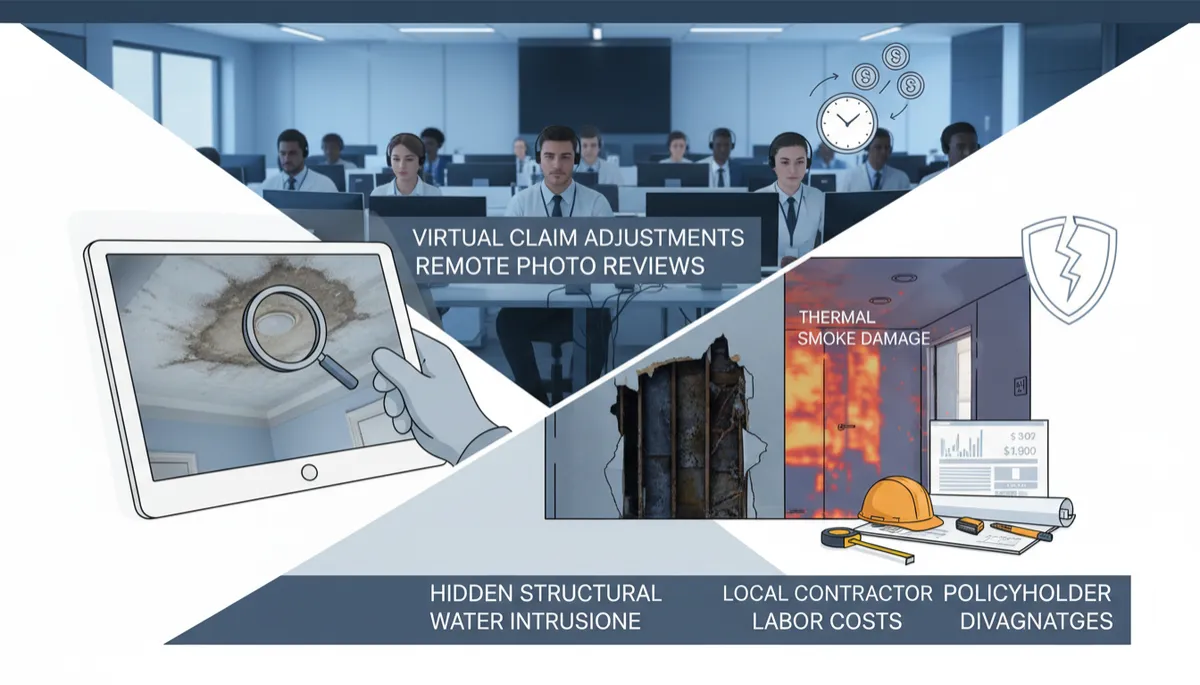
Remote Photo Reviews using pictures you or a third-party inspector upload to an app
Automated systems and AI tools that “estimate” damage without ever smelling smoke, feeling moisture, or walking your property
On paper, it sounds innovative. In reality, it’s a system designed to keep payouts low, minimize scrutiny, and move claims off the books as cheaply as possible. That’s where the real Insurance Industry Challenges begin—not for carriers, but for you, the policyholder.
Why Carriers Love Virtual Adjustments: Time, Money, and Control
Let’s be blunt: carriers did not adopt Virtual Claim Adjustments to make your life easier. They adopted them because they slash overhead. No more fleets of field adjusters, no more travel time, no more long on-site inspections. A single virtual adjuster in a call center can process far more claims in a day than a traditional field adjuster ever could. That means:
Lower labor costs – Fewer trained boots on the ground, more low-cost remote staff following scripts
Faster claim closures – Move the file quickly, pay the minimum, and move on
Tighter narrative control – When the only evidence is a handful of photos and a call transcript, it’s much easier to argue the damage is “minor,” “pre-existing,” or “not covered”
Industry articles from Forbes and Insurance Journal celebrate these systems for improving “efficiency” and “customer satisfaction.” But ask yourself a simple question: If virtual systems are saving carriers millions, where is that money going? It’s not landing in your pocket when your kitchen ceiling collapses from a slow leak or your home is filled with invisible smoke residue after a fire down the hall.
💡 Reality Check: Every dollar the carrier saves on your claim is a dollar you don’t receive to rebuild, repair, and protect your home’s value.
The Policyholder Disadvantage: You’re Fighting Blind While the Carrier Plays Remote
The shift to virtual Property Loss Evaluation leaves homeowners at a severe, structural disadvantage. You’re expected to become the photographer, the inspector, and sometimes even the estimator, while the carrier sits safely behind a screen, picking apart your evidence. This is the core of modern Policyholder Disadvantages in the digital claims era:
You don’t speak the technical language of building codes, smoke migration, or moisture mapping—but the carrier’s team does, and they use that gap to their advantage.
You can’t see inside walls, attics, or subfloors—yet the entire claim may be decided based on what’s visible in a few smartphone photos.
You don’t have access to the carrier’s internal estimating software or pricing databases, especially for local contractor labor costs.
Meanwhile, the call center adjuster handling your file may never have stepped foot in a construction site, yet they’re empowered to decide what your home “really” needs. That’s not just unfair; it’s dangerous to your financial future.
The Fatal Flaw of Remote Photo Reviews: What the Camera Can’t See Will Hurt You
Remote Photo Reviews are the backbone of modern Virtual Claim Adjustments. You’re told to snap photos of visible damage—stains, cracks, char marks—and upload them to an app. Maybe a third-party inspector takes a quick walk-through and does the same. Those images are then fed into a system or reviewed by a remote adjuster who might spend a few minutes scrolling before issuing a decision on your entire claim.
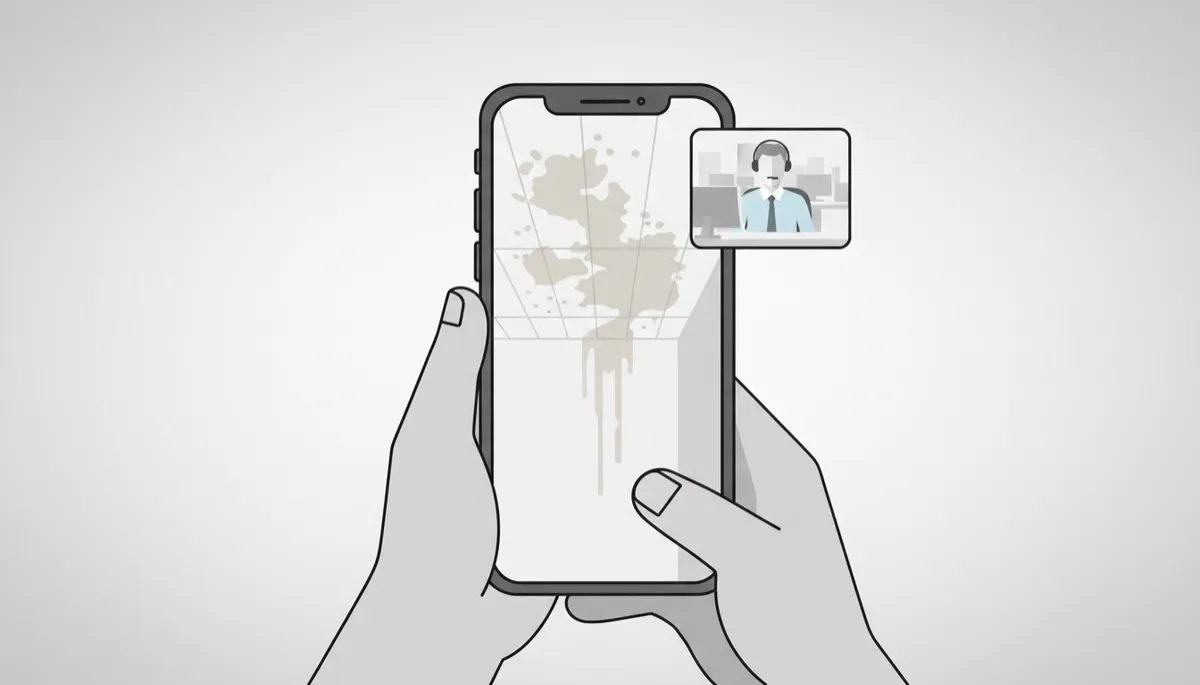
When claims hinge on a few photos, hidden damage is almost guaranteed to be ignored.
But photos only capture surfaces. They don’t reveal Hidden Damage Detection issues like moisture trapped behind walls, smoke particles embedded in insulation, or structural weakening in framing members. And that’s exactly where homeowners lose the most money—and long-term safety.
Hidden Structural Water Intrusion: The Disaster Behind the Stain
Virtual adjusters love to treat water damage as a “surface issue.” They see a small stain on your ceiling via photo and approve a coat of paint and maybe a patch of drywall. What they don’t see—because they aren’t there and don’t use proper tools—is the hidden structural water intrusion spreading silently through your home’s bones.
Moisture wicking up wall studs and into insulation
Subfloor saturation that weakens flooring systems over time
Early-stage mold growth in dark, unventilated spaces you can’t see or photograph
A proper on-site Property Loss Evaluation uses moisture meters, thermal imaging, and invasive testing when necessary. A remote adjuster staring at your phone photos doesn’t. So the claim gets under-scoped, the payout is slashed, and months later you’re dealing with warped floors, musty odors, or a failed home inspection when you try to sell. The carrier will gladly point back to the original “settlement” and claim the rest is your problem.
Thermal Smoke Damage Behind Drywall: The Invisible Threat After a Fire
Fire and smoke claims are where virtual adjustments become truly reckless. Smoke doesn’t politely stop at the surface of your walls. It moves with heat and air pressure, penetrating wall cavities, insulation, electrical chases, and ceiling voids. This thermal smoke damage behind drywall can leave toxic residues and persistent odors long after the visible soot is wiped away.
Yet virtual adjusters often base their entire evaluation on a few photos of charred cabinets or blackened paint. They may authorize “clean and paint” when the correct scope should include:
Removal of affected drywall and insulation in impacted areas
Thorough cleaning of structural members, wiring, and mechanical systems
Professional deodorization and air filtration to remove residual particulates
This is not cosmetic. It’s about health and safety. Breathing in leftover smoke residues and combustion byproducts is not something you fix with a coat of primer. When insurers rely on Remote Photo Reviews, they conveniently “don’t see” the damage that would cost them real money to address properly.
Centralized Call Centers: The Human Shield Between You and a Fair Claim
Another pillar of the virtual claims model is the centralized call center. Instead of a local adjuster who understands your region, your building styles, and your labor market, you’re routed to a rotating cast of voices in a distant office. They read from scripts, follow decision trees, and are trained to keep the claim “on budget,” not to maximize your recovery.
They rarely know local building codes or enforcement practices that might require more extensive repairs than their software suggests.
They often rely on national or regional pricing databases that underestimate local contractor labor costs, especially in high-demand or post-disaster markets.
They are incentivized—directly or indirectly—to close files fast and avoid reopening claims, even when new damage is discovered.
This structure isolates you. It makes it harder to challenge decisions, harder to get someone with real authority on the phone, and harder to present new evidence. The process is designed to wear you down until you accept less than you need—and less than you deserve under your policy.
The Pricing Trap: How Virtual Adjusters Lowball Local Contractor Labor Costs
Even when virtual adjusters acknowledge the scope of damage, there’s another weapon carriers use to shrink your payout: understated local contractor labor costs. Their estimating software may be based on outdated price lists, broad regional averages, or negotiated rates that no reputable local contractor will actually accept in your area.
Here’s how that plays out in real life:
The virtual adjuster issues an estimate for $18,000 to repair your kitchen after a leak and resulting mold remediation.
You bring in three licensed local contractors. Their bids come in at $28,000–$32,000 because material and labor costs in your city have surged.
The carrier insists its “market pricing” is accurate and pressures you to find someone willing to work for less—or to cut corners on the scope of work.
Suddenly, you’re stuck. Either you pay the difference out of pocket, accept a lower-quality repair, or keep fighting a remote system designed to outlast you. This is one of the most brutal Insurance Industry Challenges homeowners face today, and it’s magnified when there’s no local adjuster advocating for a realistic, code-compliant repair plan.
📌 Key Takeaway: If your claim estimate won’t hire a reputable contractor in your area, the problem is not “expensive contractors”—it’s an insurer using virtual systems to lowball your loss.
Technology Isn’t the Enemy—Unfair Use of It Is
Let’s be clear: technology itself isn’t the villain. AI, AR, and digital platforms could make claims more transparent and accurate. Industry research from McKinsey and Forbes highlights the potential for faster processing, better documentation, and improved fraud detection. Used ethically, Virtual Claim Adjustments and Remote Photo Reviews could support both carriers and policyholders.
But that’s not the system most homeowners are dealing with. Instead, we see technology weaponized to:
Limit what gets counted as damage by ignoring what can’t be captured in a simple photo
Push low, take-it-or-leave-it settlements before you understand the full extent of your loss
Create layers of distance between you and anyone with real authority to change the outcome
At Metro Public Adjustment Inc. Nevada, we’re not anti-technology. We’re anti-exploitation. Our job is to cut through the digital fog, force a real conversation about the true scope of your loss, and demand that the carrier honor the policy you’ve been paying for—down to the last dollar.
How a Public Adjuster Levels the Playing Field Against Virtual Systems
You don’t have to accept the carrier’s virtual version of reality. A licensed public adjuster works for you, not the insurance company. We step into the gap created by Virtual Claim Adjustments and centralized call centers and bring the focus back to the actual condition of your property—not what a distant adjuster can see on a screen.
We perform thorough on-site inspections, looking for hidden structural water intrusion, smoke migration, and code issues that remote systems routinely miss.
We document thermal smoke damage behind drywall and other concealed losses using industry-standard methods that carriers recognize and respect—when forced to.
We build estimates based on real local contractor labor costs, material prices, and code requirements in your market, not national averages designed to save the carrier money.
We negotiate directly with the carrier, challenge lowball offers, and push back when they try to hide behind virtual processes or call center scripts.
In other words, we bring the fight back to the real world—where your home, your family, and your financial security actually live.
Don’t Let Virtual Claim Adjustments Decide Your Future
Your home is not a set of thumbnails on an adjuster’s monitor. It’s likely your largest asset, your family’s shelter, and the foundation of your long-term wealth. Allowing a remote, rushed, and incomplete Property Loss Evaluation to dictate what you can afford to repair is a gamble you cannot afford to take.
The insurance company has built an entire digital machine to protect its profits. You deserve someone just as relentless protecting your claim. That’s where Metro Public Adjustment Inc. Nevada stands—bold, unapologetic, and firmly on the side of homeowners who refuse to be shortchanged by carrier-friendly virtual systems.
💥 Stop Playing by the Carrier’s Rules: If your claim is being handled virtually—through apps, Remote Photo Reviews, or distant call centers—assume they are missing damage and underestimating costs until a qualified advocate proves otherwise.
Ready to Push Back? Here’s Your Next Move.
If you’re dealing with a water loss, fire, storm damage, or any serious property claim that’s being run through a virtual system, you are already at a disadvantage. The good news is, you don’t have to stay there. You can bring in a licensed public adjuster who understands the games carriers play with Virtual Claim Adjustments, knows how to prove Hidden Damage Detection issues, and won’t back down when a call center insists “that’s the best we can do.”
Metro Public Adjustment Inc. Nevada exists for one reason: to fight unfair insurance practices and make sure homeowners receive every dollar their policies promise. We don’t apologize for being aggressive. When the carrier is using technology to protect its bottom line, you need someone just as determined protecting yours.
Don’t let a remote adjuster with a stack of files and a script decide the fate of your home. Bring in an advocate who will inspect, document, and negotiate based on reality—not on what a few photos suggest.
Demand every dollar you deserve with a licensed public adjuster. Before you accept that virtual offer, get a second opinion from someone whose only job is to protect you—not the carrier’s profit margin.

Those who use a public adjuster, recieve an a average of 574% more vs those who do not.” (OPPAGA)
When Is A Public Adjuster Needed?
When the client discovers damage
(to verify coverage).
When a current claim is under-paid or denied.
The sooner we get involved the better the settlement.
Why Choose Metro Public Adjustment NV?
Select from our tailored options to protect your property.

Step by Step Guidance
We communicate each step so you are empowered to make confident decisions.

Help with Claims
Once you receive your insurance companies initial offer, we take over the claim and handle all insurer communications directl

No Cost to See
Ask about our No-Cost Claim Double Check so you can evaluate all your options
We work with all insurance companies
We negotiate directly with your insurance so you don’t have to







Need help? Talk To Our Agents.
Let's get you back to before

LEGAL
Affiliated with:
Metro Public Adjustment Inc.
MPA Nevada is a licensed Public Adjuster License number: 4276621
NAICS 524291
Google Review
FOLLOW US


©Copyright 2026. Metro Public Adjuster NEVADA. All Rights Reserved.